Many businesses are still getting found online, but fewer are turning that visibility into real customer inquiries. The reason isn’t a lack of demand — it’s how customers now decide who to contact.
Today, potential customers compare businesses through Google search results, Google Business Profiles, reviews, social media, and even AI tools like ChatGPT before ever visiting a website. In many cases, they form a preference before making contact.
At Henderson Digital Marketing & Printing, we’re seeing a common trend: businesses may still appear in search results, but competitors with clearer messaging, stronger reviews, and easier customer experiences are winning more inquiries.
Being visible online is no longer enough. Customers choose businesses that are:
Easy to understand
Well-reviewed and credible
Consistent across platforms
Simple to contact or book
Even small issues like outdated information, weak reviews, slow websites, or unclear messaging can cause customers to move on to another option.
Successful businesses are focusing on where decisions are actually being made:
Google Search & Google Business Profiles
Reviews and ratings
Social media platforms
AI-generated search answers Local directories and maps
The businesses seeing the strongest growth are improving the full customer journey – from first impression to inquiry.
A few simple questions can help identify gaps:
Is your business information consistent everywhere online?
Do your reviews feel current and trustworthy?
Can customers quickly understand your services?
Is it easy to call, message, or book you?
Are you showing up across multiple trusted platforms?
At Henderson Digital Marketing & Printing, we help businesses strengthen their online presence, improve credibility, and turn more searches into real customers through strategic websites, SEO, advertising, branding, and digital marketing solutions.
The goal is no longer just getting found online – it’s making your business the clear choice when customers are ready to decide.
Contact us to assess your current position and build a plan focused on demand generation, conversions, and sustained growth.
Effective design is all about storytelling. It captures attention, guides viewers through an experience, and leaves a lasting impression. Whether you’re creating a brochure, an infographic, or a website, design helps bring your ideas to life by engaging people from the very first moment.
Why the Rule of Three Works
Three is a magical number. It’s easy for our brains to process, and it resonates deeply with the way we think and experience the world.
Think about it:
Important actions often come in three steps (Stop, Drop, and Roll).
Powerful slogans use groups of three (Life, Liberty, and the Pursuit of Happiness).
Every great story has a beginning, middle, and end!
The simplicity of three helps people connect, remember, and act. When it comes to design, using this “rule of three” can make your message clearer and more memorable. Here’s how you can use the rule of three to elevate your marketing materials:
1. Three Steps: Guide Your Audience
People like clarity and direction, especially when they’re making decisions. Giving them a visual path to follow can encourage action and make complex ideas easier to grasp.
Use a 3-step infographic to simplify processes or instructions.
Create a 3-part “make the switch” kit that clearly outlines the transition for new customers.
Add 1-2-3 arrows to guide your audience down a visual path, showing the action steps they need to take.
These three-step visuals make it easy for your audience to understand what to do next.
2. Three Pathways: Offer Simple Choices
Too many options can overwhelm potential customers, causing them to disengage. Simplify the decision-making process by offering three clear options or pathways.
On postcards or flyers, give recipients three choices: view samples, get a quote, or connect with a specialist.
On landing pages or apps, direct users through three key actions: enroll, log in, or ask for more information.
By narrowing down the choices to three, you make it easier for people to take the next step and stay engaged with your brand.
3. Three Choices: Encourage Decision Making
When people are presented with too many choices, they often hesitate or avoid making a decision at all. The rule of three helps to keep things manageable.
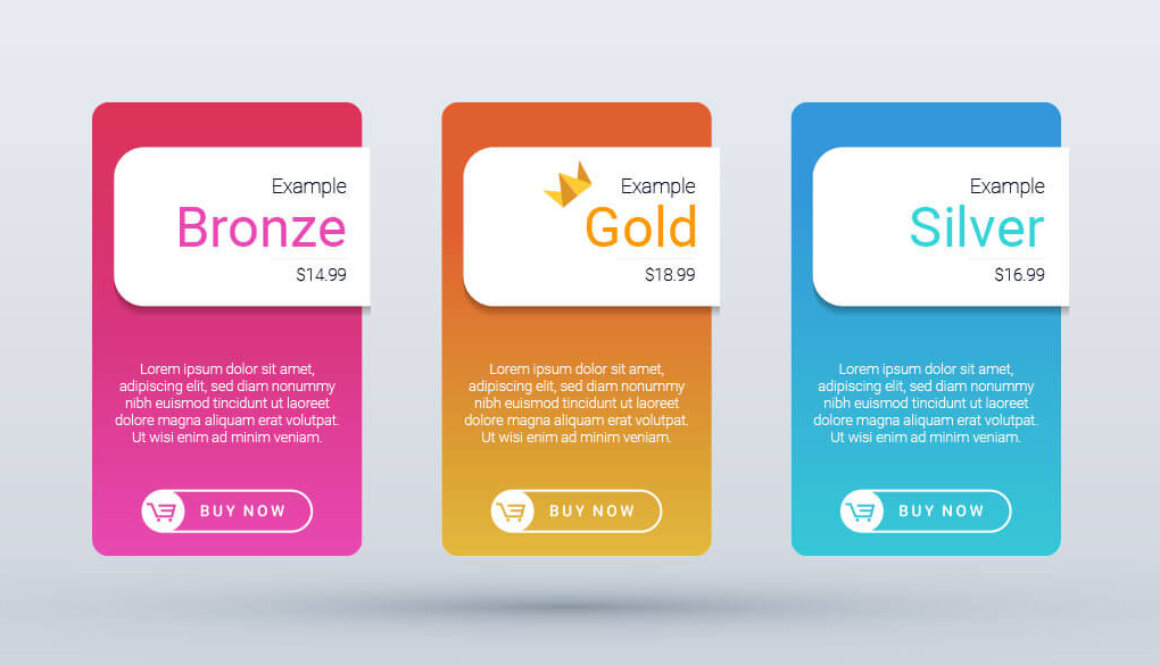
In your pricing plans, offer three options: Platinum, Silver, and Gold.
Use 30-60-90 day subscription options to guide customers towards the right choice for them.
Offering three well-defined choices reduces decision fatigue and leads to higher conversion rates.
4. Three-Panel Stories: Surprise and Delight
One of the most memorable ways to use the rule of three is by creating three-panel stories. This can be an especially effective approach for showcasing products or services in an unexpected and fun way.
For example, imagine a mattress sell sheet:
Panel 1: A donut with legs lounging on a luxurious mattress.
Panel 2: A donut hole with legs, sprinting towards the mattress.
Panel 3: The donut hole dives through the donut’s hole and lands on the bed with a big, goofy smile.
Punchline: “The Perfect Mattress for Finding Your Centre.”
This three-panel visual uses surprise and humour to capture attention and create a memorable experience. It’s not only visually engaging but also communicates your message in a way that sticks.
From Confusion to Clarity, Disengagement to Delight
Great design isn’t just about aesthetics; it’s about guiding your audience from confusion to clarity. The rule of three helps simplify complex ideas, making them easier to understand and act on. By weaving a narrative arc into your visuals, you can transform your marketing pieces from mere communication tools into powerful stories that drive results.
Are you ready to create designs that draw people in and leave a lasting impact? Let us help you craft engaging print materials that speak to your audience in a way that’s memorable and meaningful.
Business referrals are one of the most effective and cost-efficient ways to grow your business. They not only bring in new leads but also foster goodwill and collaboration within your local business community. Referrals can open doors to speaking engagements, blog posts, webinars, and other opportunities that establish you as an expert in your field. Since referrals cost nothing to give, they can double your leads without increasing your marketing budget.
In his book Niching Up, Chris Dreyer explores how businesses can use referrals to generate more opportunities. He outlines three primary types of referrals that can help you grow: client referrals, complementary service referrals, and competitor referrals. Here’s how each one works:
1. Client Referrals
Client referrals are the most straightforward—and often the most effective—way to grow your business.
When you deliver great results and exceptional service to your clients, they will naturally want to share their positive experience with others. To make the most of this, it’s important to actively encourage referrals. Simple strategies like asking for online reviews, offering printed referral cards, or even creating video testimonials can help motivate clients to spread the word.
If you’re doing great work, client referrals will come your way. However, having a system in place ensures you’re capturing all the potential leads from happy customers.
2. Complementary Service Referrals
Another powerful way to generate referrals is by partnering with businesses that offer complementary services to your own.
For instance, if you run an art gallery, you could team up with a framing company to offer your clients a complete package of custom artwork and framing. This approach helps you reach new customers while building mutually beneficial relationships with other businesses in your community. By offering a bundled service, you’re adding extra value for your clients, which can lead to more referrals for both businesses.
Look for opportunities to collaborate with businesses that share a similar target audience but offer non-competing products or services. This creates a win-win situation and strengthens your ties within the local business community.
3. Competitor Referrals
At first glance, referring clients to your competitors may seem counterproductive, but in certain situations, it can be highly beneficial.
There are several scenarios where competitor referrals can make sense:
If you’re not licensed to operate in a particular region or state, referring a client to a competitor who is can ensure they get the service they need.
If your schedule is full and you can’t take on a new client, referring them to a competitor ensures they don’t go without service.
If a client isn’t the right fit for your business or you feel there’s a mismatch, sending them to a competitor who might be a better fit can lead to a better outcome for both you and the client.
When referring clients to competitors, always provide options and allow the client to make the final choice. Every business has its strengths and specializations, and what’s best for each client will depend on their specific needs. By offering thoughtful referrals to competitors, you’ll position yourself as a trusted and generous resource in your community.
Referrals = Relationships
The key to generating quality referrals is building strong relationships with other businesses in your community.
Take the time to network and connect with other business owners who are in your niche or in complementary industries. By referring clients to other businesses that specialise in areas outside of your offerings, you’ll not only create a network of trusted connections but also open the door for referrals to come back to you in the future.
Building these relationships helps foster a sense of community and collaboration—something that will pay off in the long run as your business grows.
Want to Build Stronger Connections and Grow Your Business?
Referrals are all about relationships. By collaborating with other businesses, providing excellent service to your clients, and being generous with your recommendations, you can create a powerful network that drives growth and helps establish you as a trusted leader in your industry.
If you’re looking for ways to strengthen your business’s marketing, contact us today! We can help you design high-quality print materials that will support your referral strategy and help you connect with potential clients.
Want to grab your target customers’ attention and make them pause when they see your content?
In today’s fast-paced digital world, customers are looking for authentic connections with the brands they trust. Inbound marketing focuses on creating tailored content that resonates with your audience and sparks meaningful interactions. To help you create dynamic content that stops people in their tracks and builds trust, here are three actionable tips.
1. Craft Attention-Grabbing Headlines
Did you know that 80% of people will scan your headline, but only 2 out of 10 will read the rest of your content? If your headline doesn’t grab attention, you risk wasting the time and effort you put into creating your content.
A compelling headline should be specific, make a clear promise to the reader, and create a sense of urgency. Take at least five minutes to brainstorm and generate 5-10 headline options before choosing the best one.
Strong headlines are the gateway to successful content marketing—so make sure they grab attention and drive clicks.
2. Use a Relevant Tone
Have you ever spoken to a pet or a child in a way that’s completely different from how you would speak in a business meeting? The tone of your content is just as important. It should match your audience’s preferences and the subject matter you’re addressing.
For example, Harley-Davidson might use a bold and rebellious tone, while Old Spice uses humour and wit to engage their audience. Should your tone be technical, playful, conversational, or straightforward?
A distinct and appropriate tone makes your content more engaging, memorable, and persuasive. It helps build rapport with your audience, making them more likely to trust your brand. Not sure what tone to use? Check out this resource for 42 different writing styles with examples!
3. Provide Practical Help
With the endless stream of blogs, videos, and podcasts circulating online, it’s easy for content to get lost in the noise. To stand out, create content that offers real value to your readers—content that helps them learn something new or improve their existing knowledge.
Before you start writing, create a detailed buyer persona that identifies your ideal reader’s challenges, goals, and pain points. This ensures your content is relevant to their needs.
Use the language your audience is likely to search for online. For example, if your target customers are looking for “home renovation” tips, don’t use the term “architectural consulting” if it’s not what they’re searching for. By aligning your content with their needs and everyday language, you increase the chances of engagement.
Drive Action to Maximize Audience Engagement
You’ve captured your audience’s attention—now it’s time to move them to action.
What do you want your readers to do next? Register for a webinar? Call your office for a consultation? Order a free brochure? A clear, relevant call to action is essential for guiding them to the next step in their journey with your brand.
And don’t forget: while digital content is crucial, reinforcing it with strong print marketing can help you stay top-of-mind with your audience. Need help updating brochures, business cards, or other marketing materials? Contact us today and let’s make sure your content marketing works hard to build relationships and drive results.
In today’s competitive market, businesses need to go beyond simply saying, “Trust us, we’re great!” Consumers are increasingly skeptical, and they want proof before they make a purchase. If you want high-quality leads that are easier to convert, your marketing messaging needs to stand out—and that starts with making credible claims your audience can trust.
A business claim is any statement that makes a promise, guarantees a result, or builds expectations. Trust is built when a business delivers on those claims. Let’s look at five key types of claims that can build customer confidence and help you win over prospects.
1. Convenience Claims: Make Life Easy for Your Customers
Consumers are busier than ever, and research shows that convenience is a top priority for over 75% of them. When you claim to offer convenience, you’re telling customers how easy it is to work with you. This includes factors like proximity, simple processes, fast delivery, or seamless customer service.
If your business can make life easier for your customers, show them how. Whether it’s offering quick turnaround times, easy online booking, or hassle-free support, make sure your messaging reflects these benefits clearly and consistently.
2. Comparability Claims: Stand Out from the Competition
Prospective customers often face difficult decisions, trying to choose between several options. Comparability claims help customers understand why your business is the best choice. These claims focus on how you stack up against your competition in terms of quality, value, effectiveness, or customer satisfaction.
Instead of simply saying your product is great, show how it compares to others in the market. Highlight features, price points, or results that make your offering the best value. Make it easy for customers to see why they should choose you.
3. Commitment Claims: Build Trust Through Transparency
Customers want to feel secure in their choice, and commitment claims reassure them that your business is reliable, trustworthy, and dedicated to its promises. These claims often focus on your values—such as transparency, fairness, integrity, or a customer-first focus—and can include promises to protect people, data, property, or the environment.
When you make commitment claims, be sure to follow through. Show your customers that you’re dedicated to upholding these values in every interaction, and they’ll be more likely to trust and stay loyal to your brand.
4. Connection Claims: Demonstrate Personal Care
Connection claims focus on how your brand connects with its customers on a deeper level. Whether it’s through excellent customer service, personalized offerings, or community involvement, these claims show that your business cares about more than just the sale.
Going the extra mile to personalize your service or show loyalty to your customers can set you apart. For example, if your business supports local charities, provides custom solutions, or offers outstanding post-sale support, be sure to highlight these efforts to foster a stronger connection with your audience.
5. Competence Claims: Show You’re the Expert
Competence claims are all about showcasing your qualifications, reliability, and consistency. These claims tell your customers that you can deliver on what you promise and that you have the skills, experience, and resources to back it up.
Whether it’s highlighting certifications, industry expertise, or proven results, make sure your competence claims are clear and backed by solid evidence. Don’t just say you’re reliable—show how you consistently deliver great results.
Promise It. Prove It. Platform It.
Does your company effectively communicate and celebrate its strengths? To maximise the impact of your claims, review all the ways your business communicates with prospects and customers.
Website: What does each page reveal about what makes you different? Is your value proposition clear?
Print Materials: Do your flyers, brochures, or product sheets highlight your superior value or unbeatable convenience? Are your print assets aligned with your digital messaging?
Customer Touchpoints: How does your business show its strengths at every touchpoint, from social media to in-store experiences?
Once you’ve identified your strengths, don’t just make the claim—prove it. Provide real proof of the results you promise, whether it’s through customer testimonials, satisfaction rates, or product durability. Use facts, stats, and faces to validate your claims and demonstrate your credibility.
By fine-tuning your competitive claims, you can increase sales, drive referrals, and build long-term customer loyalty. Ensure that your marketing consistently reflects what your business does best—and prove it to your audience with compelling, trustworthy evidence.
Ready to Make Your Claims Count?
Want help fine-tuning your marketing strategy? Contact us today to explore how we can help you create impactful, trust-building messaging that resonates with your audience and drives results.
If you’re a shopkeeper reading up on marketing techniques to increase revenue, keep calm and try not to succumb to holiday stress by throwing your hands up in the air, taking to the rum and eggnog, or having a meltdown like Chevy Chase on Christmas Vacation.
Our gift to you this year is the following list of 7 merry ways for stores to get shoppers more in the holiday spirit and increase holiday sales.
1.) Holiday Marketing Campaigns
Retail store owners have traditionally seen an increase in their sales this time of year, but with an ever-changing landscape of retail shopping due to the rise in popularity of online and mobile shopping, shopkeepers must go beyond simply offering store sales and discounts when planning their holiday marketing strategies.
While it’s great to offer customers discounts, coupons, sales & specials, embracing more multi-channel marketing techniques is definitely something to consider.
According to a recent survey, 71% of shoppers who use mobile apps browse products online, then physically go to the store to make their purchases. If your store doesn’t have an app or your products aren’t online, holiday shoppers might not be aware of your inventory or specials and might miss out altogether.
As a retail store owner, decide which holidays are most relevant to your business and plan your holiday marketing campaign around those days. It’s important to understand your market, so you know what audience to target your ads toward and which dates correspond accordingly.
Admail, flyers, catalogues, postcards, and brochures are all things Henderson Printing are able to help with. For more information contact us today for a free consultation.
2.) Email Marketing & eCatalogues
If your business doesn’t have an online store, multi-channel marketing allows for holiday shoppers to browse either online or at home and then make their purchases in-store.
If you decide to advertise online, consider the following:
A recent study by Custora found that email marketing, third only behind online search (organic and paid), was a dominant marketing channel in 2014 accounting for 17.7% of online eCommerce orders, nearly 10x that of all social media combined.
Seeing as how social media campaigns seem to be the preferred tactic among small and medium-sized businesses, you might want to consider devising a more effective strategy. But remember, direct marketing (such as traditional admail) still accounted for a higher percentage than both coming in at 24.9%.
eCatalogues
Keeping with online browsing and email marketing stats, eCatalogues are something your business might also want to consider.
Although it might seem catalogues may be falling by the wayside or going the same route as phone books and newspapers, imagine recapturing the enthusiasm people once had for catalogue shopping.
eCatalogues are a great way to showcase your products. Plus, it makes little sense not to repurpose the successful marketing techniques of yesteryear re-presented in a shiny new gift wrap of nostalgia.
If you’re a do-it-yourself business owner with a knack for design or are familiar with programs like InDesign and Photoshop, you might like to create your own catalogue. But if not, have no worries, you can always hire us to create one for you.
Once you have your eCatalogue, distribute it as you please. Throw a link up to it on your website or distribute it to your mailing list in the form of a PDF, and watch sales increase.
If you do decide to go this avenue, just remember (if you haven’t done so already), to start keeping a database of your customers to build mailing list in advance.
3.) Free Holiday Gifts
Who doesn’t like receiving gifts? Especially during the holidays.
Free calendars, gift certificates, and inventory items (such as apparel) for shoppers are all wonderful promotional ideas, either with purchase or in-store.
Check out Henderson Printing’s marketing materials section, or design your own and have them shipped right to your door.
4.) Create Holiday Gift Cards
If you’re anything like the majority of other holiday shoppers, you never know what to get anyone, always procrastinate, and leave everything to last minute.
As of August 2015 these are the most popular holiday gift items consumers plan to shop for in Canada this season:
Offering gift cards for sale in your store can help satisfy this demand, as well as appeal to a large demographic of holiday shoppers. Stylize gift cards with festive designs and notify customers in your marketing campaigns (both online & print) to let shoppers know your store now offers gift cards.
Save your customers valuable time and make extra cash by offering to wrap their purchases.
Wrapping paper and ribbons not only inspire gift giving, but if you buy your supplies on a budget such as at a store like Dollarama, can be offered rather frugally on your part as well. Plus, it helps out the ones who are entirely unable to wrap presents.
Have the option available at the cash and ask each customer.
6.) Decorate Your Store
Making your retail store (not to mention online store or website) look festive is one sure way to get shoppers in the door.
Nothing says Christmas like beautiful decorations, and if your store is nicely decorated customers are more likely to want to do their shopping there. You can decorate rather inexpensively if you shop at discount stores and use your imagination.
Put on your favourite Christmas album. Have a model train set at home? Try to incorporate that somehow. Make it all about the atmosphere.
Look for ideas on Etsy, Pinterest, and other arts & crafts websites as well.
7.) Host Special Holiday Events
Throw a Christmas party, shindig, or box social. Hot cocoa and marshmallows. Have a parade, or build your own version of Santa’s Workshop.
It’s the holidays! Get creative, have fun. Most importantly, get shoppers together and give something valuable back to your community. Good tidings and cheer for all to be had.
Digital Marketing can feel like a dark tunnel that every business is asked to walk through.
The challenge doesn’t become whether or not you’re going to do it. Now that 2016 is here, the question becomes, who are you going to trust to help get you through, into the light?
My thought is this:
Don’t just assume that the person with the biggest flashlight knows how to use it.
When you are walking in the dark you want to find the person near you who has the biggest and brightest flashlight. But what if all they end do is shine the light on themselves? Or worse, what if they shine it in your eyes, blinding you from the facts? Then they’re just having fun with you.
This ever-changing industry of Digital Marketing has a lot of talkers, a lot of “experts” who want to tell you how much they know. They like to impress you with current trends they think they know and can discuss the technology in a way that enlightens, but actually confuses you.
In reality, if you want to get through this Digital Marketing tunnel successfully, find someone who knows where to point the flashlight so that you can be sure you’re taking the right steps. Someone who’s willing to walk with you.
That’s something we at Henderson Web Solutions are passionate about doing. We’ve been in this tunnel for a while now and have some interesting experiences we can share with you. So let’s have a conversation.